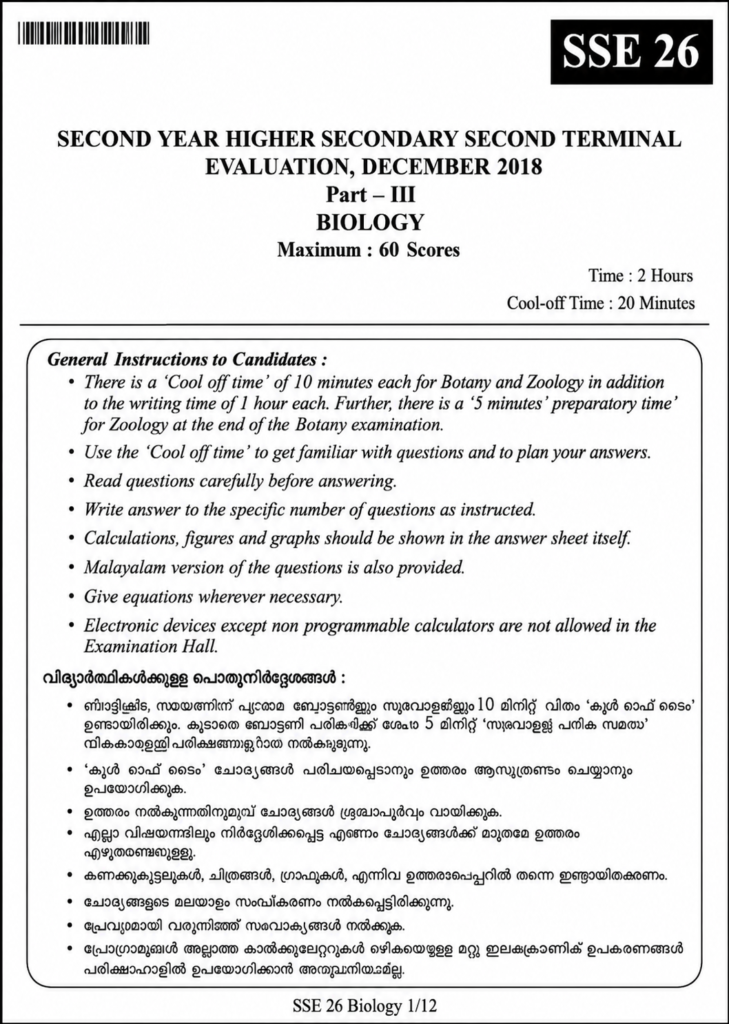
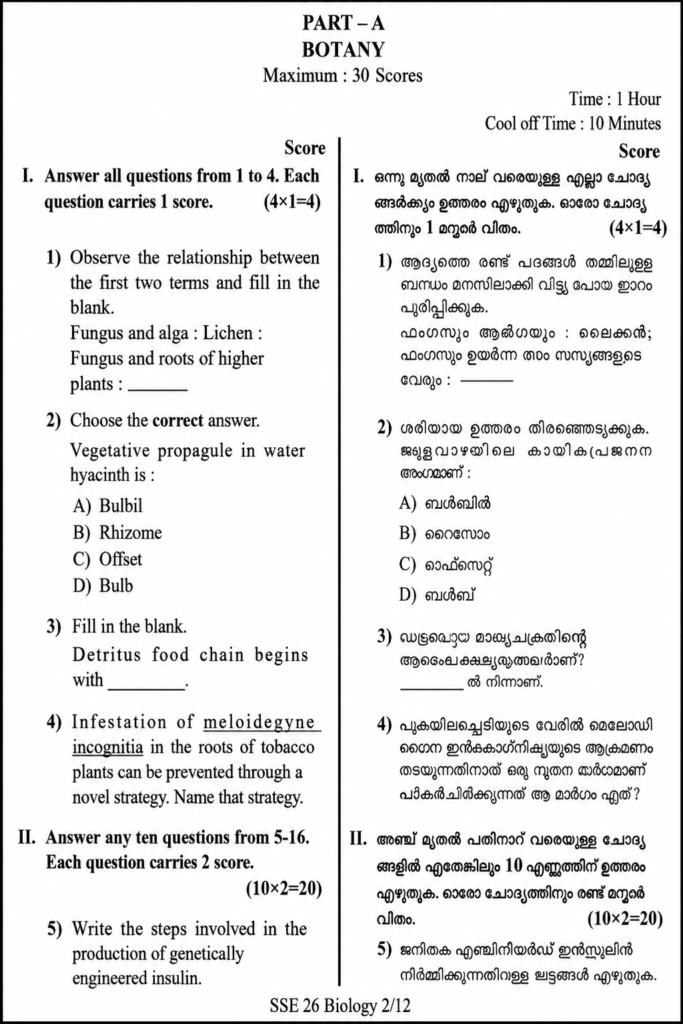
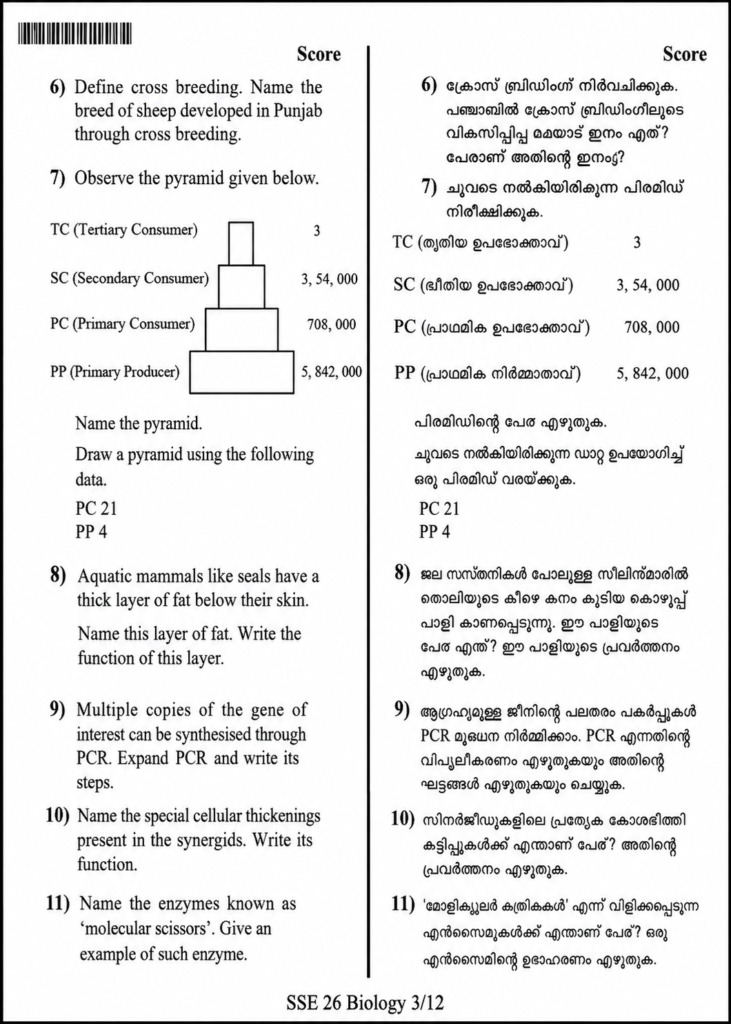
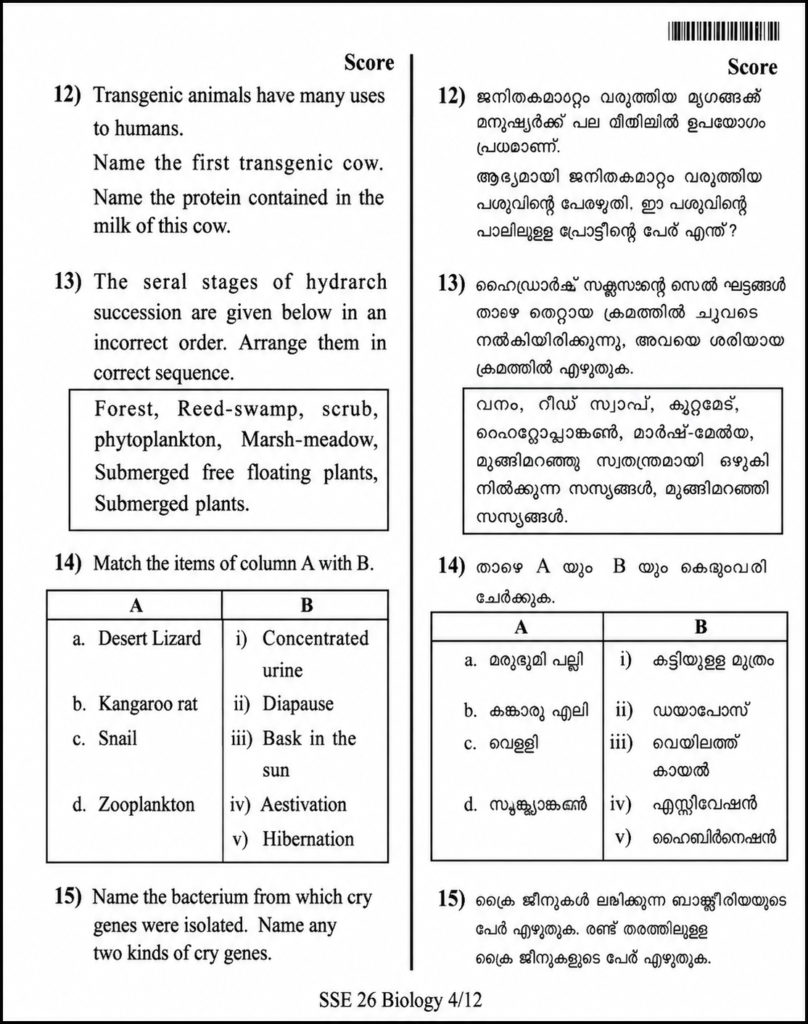
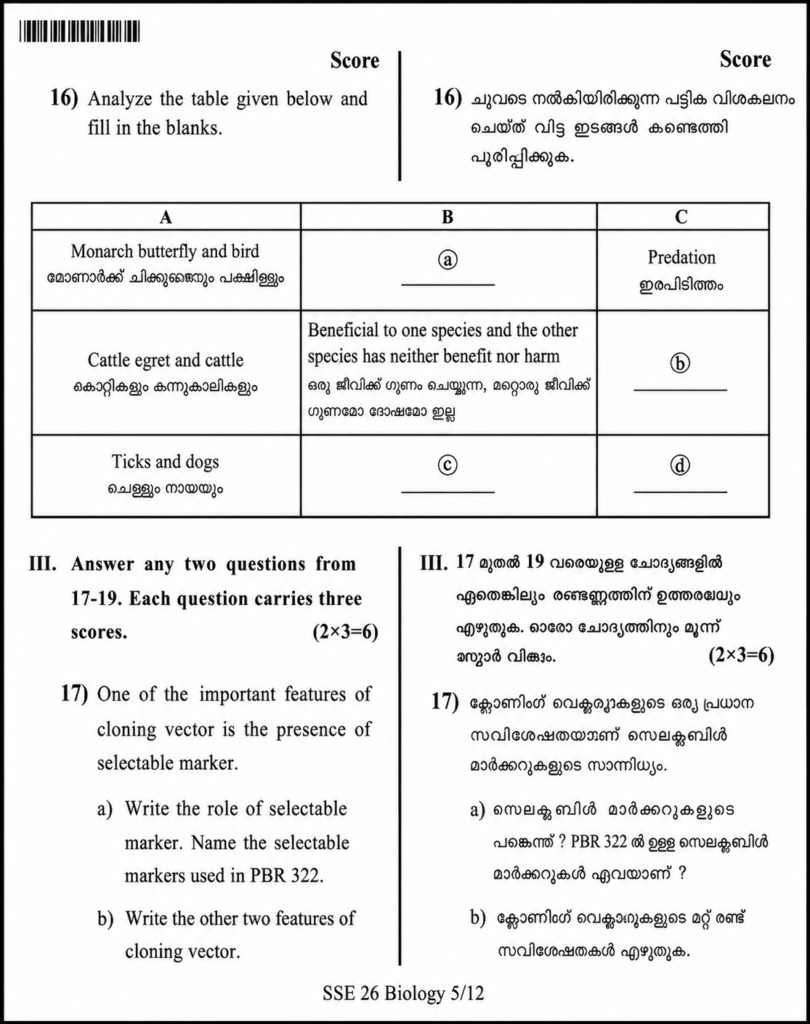
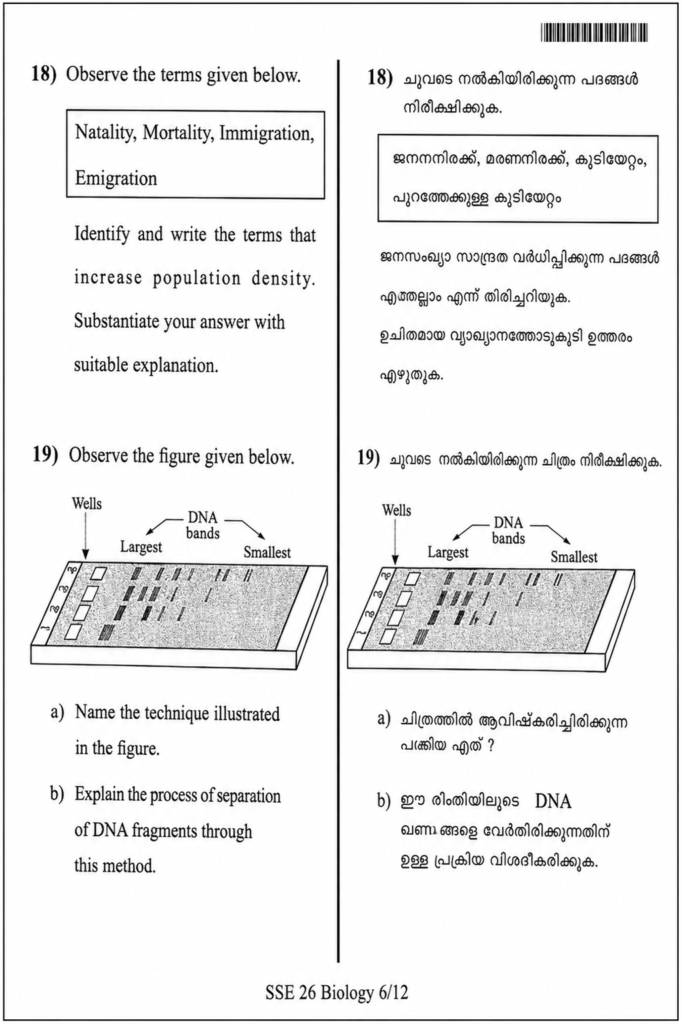
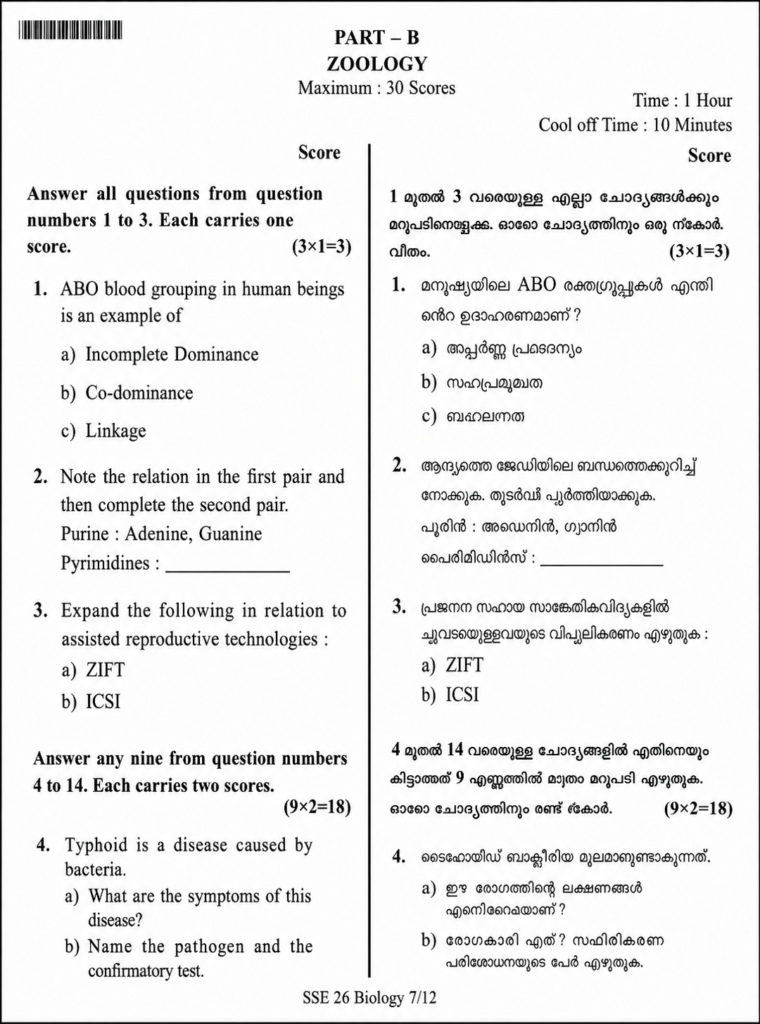
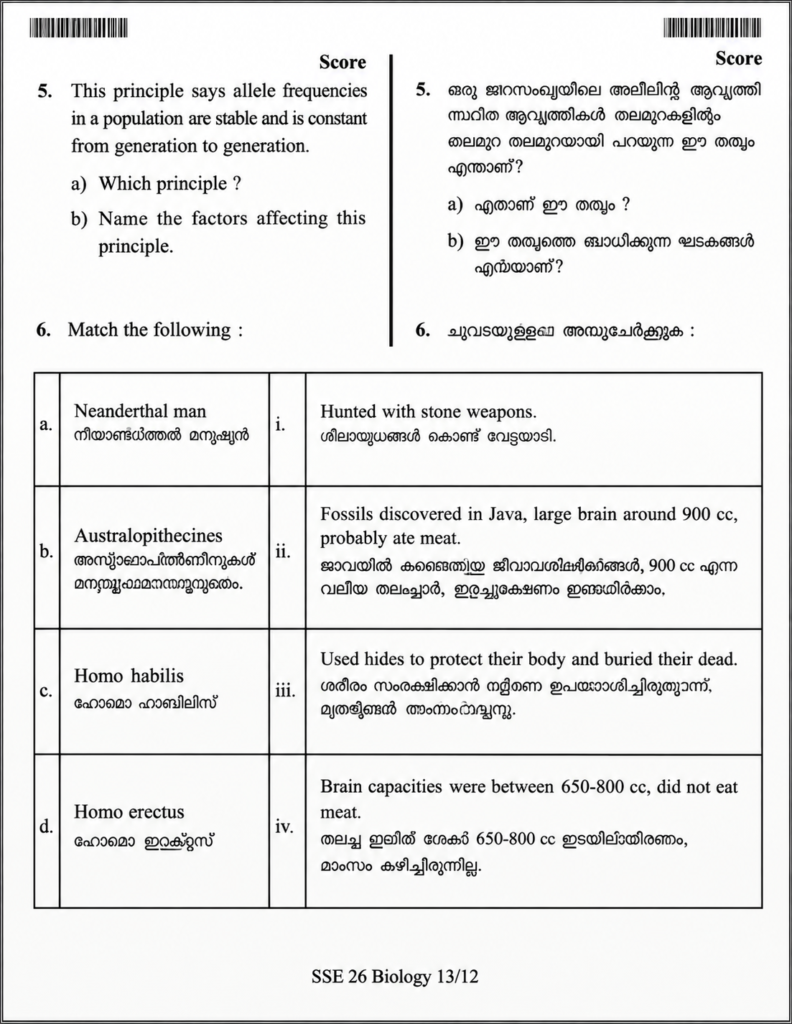
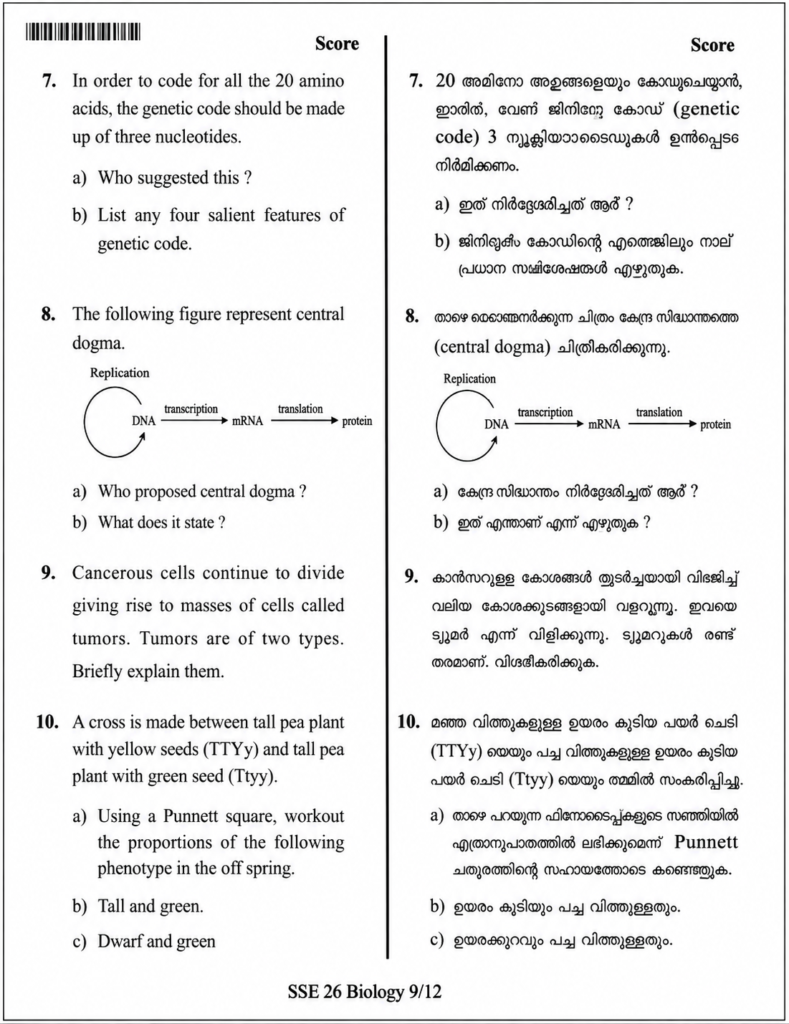
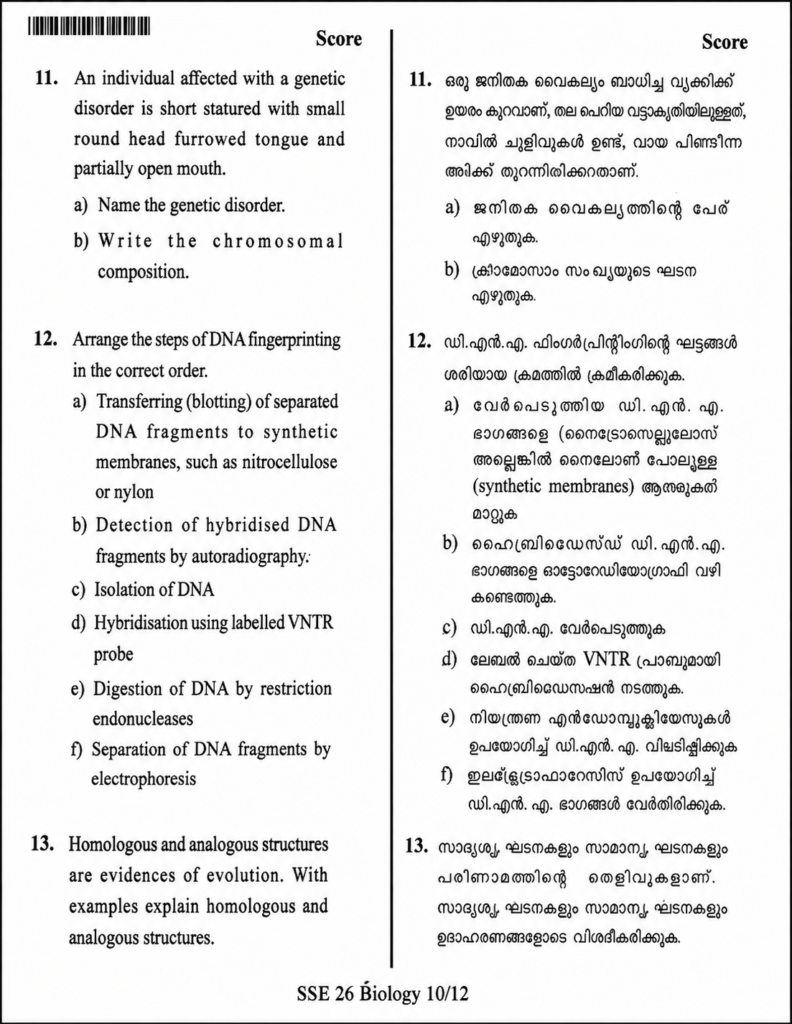
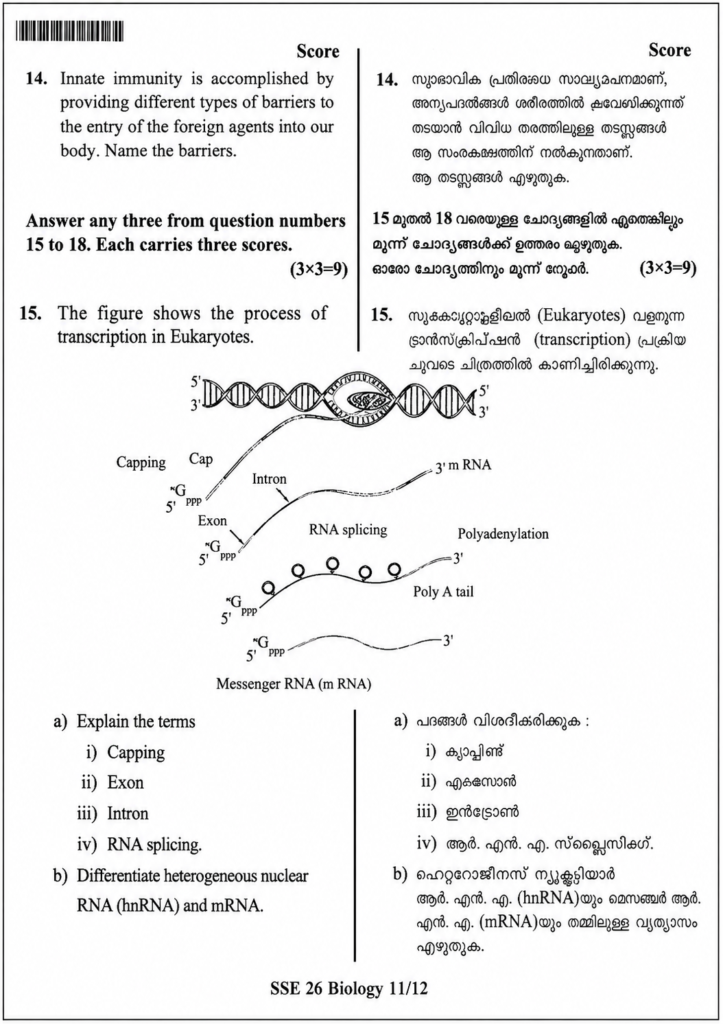
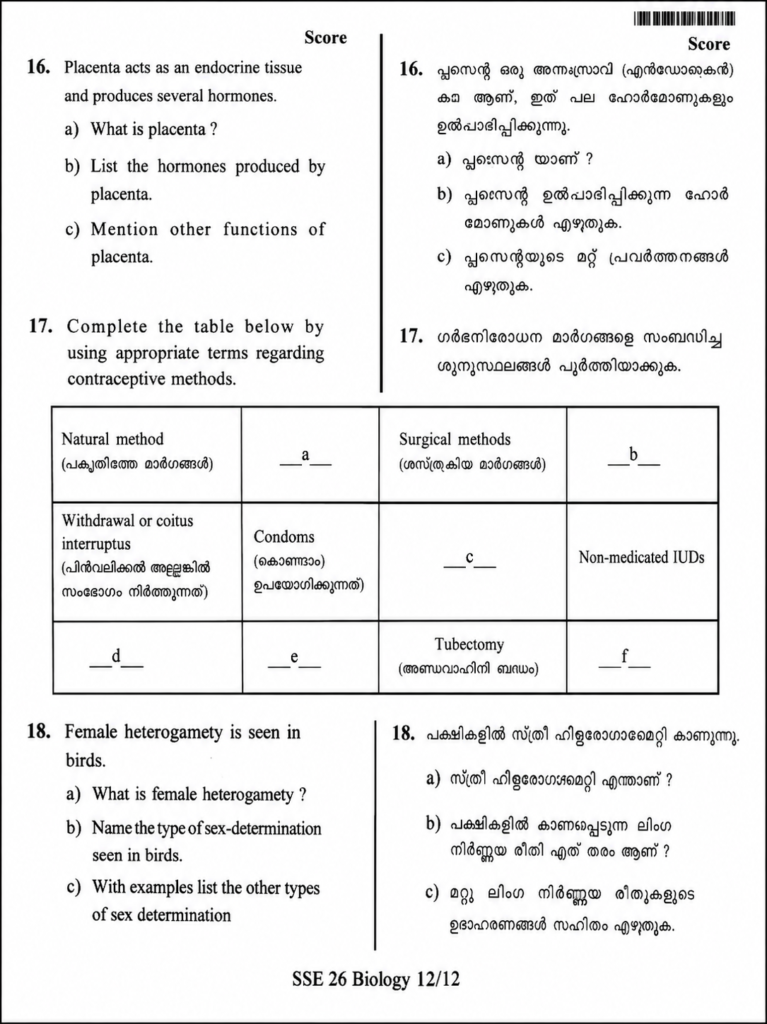
The Second Terminal Examination 2018 Question Paper is a useful study resource for students preparing for school examinations. It helps students understand the exam pattern, marking scheme, question types, and difficulty level. Practicing previous year question papers improves time management, accuracy, and confidence while identifying important topics for revision. It also allows students to evaluate their strengths and weaknesses before the final examination. By solving the paper in a timed environment, students can experience a real exam atmosphere and enhance their problem-solving skills. Regular practice with the 2018 Second Terminal Examination Question Paper is an effective way to improve performance and score higher marks in upcoming examinations.
Table of Contents
Kerala +2 Second Terminal Examination 2018Biology Practice MCQs (Q1–Q50)
Kerala +2 Biology MCQ Practice (Q1–Q50)
Kerala +2 Second Terminal Examination 2018
Biology Practice MCQs (Q1–Q50)
Q1. DNA replication occurs during:
A. G₁ Phase
B. S Phase
C. G₂ Phase
D. M Phase
✅ Correct Answer: B. S Phase
DNA replication takes place during the S (Synthesis) phase of the cell cycle before cell division.
Q2. The functional unit of the kidney is:
A. Neuron
B. Nephron
C. Alveolus
D. Glomerulus
✅ Correct Answer: B. Nephron
The nephron filters blood, removes waste products, and forms urine.
Q3. The powerhouse of the cell is:
A. Ribosome
B. Nucleus
C. Mitochondria
D. Golgi Body
✅ Correct Answer: C. Mitochondria
Mitochondria produce ATP through cellular respiration and are known as the powerhouse of the cell.
Q4. Which hormone promotes fruit ripening?
A. Auxin
B. Ethylene
C. Cytokinin
D. Gibberellin
✅ Correct Answer: B. Ethylene
Ethylene is a gaseous plant hormone responsible for fruit ripening.
Q5. Universal donor blood group is:
A. A
B. B
C. AB
D. O
✅ Correct Answer: D. O
Blood group O (especially O negative) is known as the universal donor.
Q6. Crossing over occurs during:
A. Prophase I
B. Metaphase I
C. Anaphase II
D. Telophase I
✅ Correct Answer: A. Prophase I
Crossing over occurs during the pachytene stage of Prophase I in meiosis.
Q7. Bt Cotton protects plants from:
A. Virus
B. Fungi
C. Bollworm
D. Bacteria
✅ Correct Answer: C. Bollworm
Bt Cotton contains a gene from Bacillus thuringiensis that protects the plant against bollworm insects.
Q8. Father of Genetics is:
A. Darwin
B. Mendel
C. Watson
D. Morgan
✅ Correct Answer: B. Mendel
Gregor Johann Mendel is known as the Father of Genetics for his experiments on pea plants.
Q9. Photosynthesis releases:
A. Carbon dioxide
B. Oxygen
C. Nitrogen
D. Hydrogen
✅ Correct Answer: B. Oxygen
During photosynthesis, green plants release oxygen as a by-product.
Q10. Protein synthesis occurs in:
A. Ribosome
B. Lysosome
C. Vacuole
D. Centrosome
✅ Correct Answer: A. Ribosome
Ribosomes are the site of protein synthesis in both prokaryotic and eukaryotic cells.
Q11. Human heart has:
A. 2 chambers
B. 3 chambers
C. 4 chambers
D. 5 chambers
✅ Correct Answer: C. 4 chambers
The human heart consists of four chambers—two atria and two ventricles—which ensure efficient circulation of oxygenated and deoxygenated blood.
Q12. HIV is a:
A. DNA Virus
B. RNA Virus
C. Bacterium
D. Fungus
✅ Correct Answer: B. RNA Virus
HIV (Human Immunodeficiency Virus) is a retrovirus that contains RNA as its genetic material.
Q13. Chlorophyll is present in:
A. Ribosome
B. Chloroplast
C. Nucleus
D. Mitochondria
✅ Correct Answer: B. Chloroplast
Chlorophyll is the green pigment found inside chloroplasts and is essential for photosynthesis.
Q14. Which vitamin is produced in the skin in the presence of sunlight?
A. Vitamin A
B. Vitamin C
C. Vitamin D
D. Vitamin K
✅ Correct Answer: C. Vitamin D
Vitamin D is synthesized in the skin when exposed to ultraviolet (UV) rays from sunlight.
Q15. Blood is pumped throughout the body by:
A. Lung
B. Kidney
C. Heart
D. Liver
✅ Correct Answer: C. Heart
The heart acts as a muscular pump that circulates blood throughout the body.
Q16. The total number of chromosomes in a human somatic cell is:
A. 44
B. 46
C. 48
D. 23
✅ Correct Answer: B. 46
Human body cells contain 46 chromosomes arranged in 23 pairs.
Q17. RNA contains which nitrogenous base instead of thymine?
A. Cytosine
B. Guanine
C. Uracil
D. Adenine
✅ Correct Answer: C. Uracil
RNA contains uracil (U) in place of thymine (T), which is present in DNA.
Q18. The largest organ of the human body is:
A. Liver
B. Brain
C. Skin
D. Heart
✅ Correct Answer: C. Skin
The skin is the largest organ of the human body and protects against injury and infection.
Q19. The plant cell wall is mainly composed of:
A. Protein
B. Cellulose
C. Lipid
D. Chitin
✅ Correct Answer: B. Cellulose
Cellulose provides strength and rigidity to the plant cell wall.
Q20. Stomata are mainly responsible for:
A. Digestion
B. Reproduction
C. Gas exchange
D. Seed formation
✅ Correct Answer: C. Gas exchange
Stomata are tiny pores on leaf surfaces that regulate gas exchange and transpiration.
Q21. Which blood cells help in fighting infections?
A. Red Blood Cells (RBC)
B. White Blood Cells (WBC)
C. Platelets
D. Plasma
✅ Correct Answer: B. White Blood Cells (WBC)
White Blood Cells (Leukocytes) protect the body from bacteria, viruses, fungi and other harmful microorganisms by providing immunity.
Q22. ABO blood group system was discovered by:
A. Gregor Mendel
B. Karl Landsteiner
C. Louis Pasteur
D. Edward Jenner
✅ Correct Answer: B. Karl Landsteiner
Karl Landsteiner discovered the ABO blood group system in 1901 and received the Nobel Prize for this discovery.
Q23. Which one of the following is a biodegradable material?
A. Plastic
B. Glass
C. Paper
D. Aluminium
✅ Correct Answer: C. Paper
Paper is biodegradable because microorganisms can decompose it naturally.
Q24. Insulin is secreted by:
A. Liver
B. Pancreas
C. Kidney
D. Thyroid
✅ Correct Answer: B. Pancreas
Insulin is produced by the beta cells of the Islets of Langerhans present in the pancreas.
Q25. ATP is mainly produced inside the:
A. Golgi Apparatus
B. Lysosome
C. Mitochondria
D. Vacuole
✅ Correct Answer: C. Mitochondria
ATP (Adenosine Triphosphate), the energy currency of the cell, is produced mainly during cellular respiration in mitochondria.
Q26. Loss of water in the form of vapour from plant leaves is called:
A. Respiration
B. Transpiration
C. Diffusion
D. Guttation
✅ Correct Answer: B. Transpiration
Transpiration is the evaporation of water from the aerial parts of plants, mainly through stomata.
Q27. Which tissue transports water and minerals in plants?
A. Phloem
B. Xylem
C. Cortex
D. Epidermis
✅ Correct Answer: B. Xylem
Xylem transports water and dissolved minerals from roots to different parts of the plant.
Q28. Which organ filters blood and forms urine?
A. Liver
B. Heart
C. Kidney
D. Lung
✅ Correct Answer: C. Kidney
Kidneys remove waste products and excess water from the blood to produce urine.
Q29. The hereditary material present in human cells is:
A. RNA
B. DNA
C. Protein
D. Lipid
✅ Correct Answer: B. DNA
DNA carries hereditary information and controls the growth, development and functioning of living organisms.
Q30. Which of the following is an autotrophic organism?
A. Human
B. Mushroom
C. Green Plant
D. Amoeba
✅ Correct Answer: C. Green Plant
Green plants prepare their own food by photosynthesis and are therefore called autotrophs.
Q31. Binary fission is a method of reproduction in:
A. Hydra
B. Amoeba
C. Earthworm
D. Cockroach
✅ Correct Answer: B. Amoeba
Binary fission is an asexual mode of reproduction in which one parent cell divides into two identical daughter cells. Amoeba reproduces by binary fission under favourable conditions.
Q32. The largest gland in the human body is:
A. Pancreas
B. Liver
C. Thyroid
D. Pituitary
✅ Correct Answer: B. Liver
The liver is the largest gland in the human body. It produces bile, stores nutrients and helps in detoxification.
Q33. The male reproductive cell is called:
A. Ovum
B. Sperm
C. Zygote
D. Embryo
✅ Correct Answer: B. Sperm
The sperm is the male gamete produced in the testes and carries half the genetic material required for fertilization.
Q34. Fertilization in humans normally takes place in the:
A. Uterus
B. Ovary
C. Fallopian Tube
D. Cervix
✅ Correct Answer: C. Fallopian Tube
In humans, fertilization usually occurs in the ampullary region of the fallopian tube (oviduct).
Q35. The normal human body temperature is approximately:
A. 35°C
B. 36°C
C. 37°C
D. 38°C
✅ Correct Answer: C. 37°C
The average normal body temperature of a healthy adult is about 37°C (98.6°F).
Q36. Malaria is caused by:
A. Virus
B. Bacterium
C. Plasmodium
D. Fungus
✅ Correct Answer: C. Plasmodium
Malaria is caused by the protozoan parasite Plasmodium and is transmitted through the bite of an infected female Anopheles mosquito.
Q37. Penicillin was discovered by:
A. Edward Jenner
B. Alexander Fleming
C. Robert Koch
D. Louis Pasteur
✅ Correct Answer: B. Alexander Fleming
Alexander Fleming discovered penicillin in 1928, marking the beginning of the antibiotic era.
Q38. Vaccination provides:
A. Passive Immunity
B. Active Immunity
C. Artificial Respiration
D. Digestion
✅ Correct Answer: B. Active Immunity
Vaccines stimulate the body’s immune system to produce antibodies and memory cells, resulting in active immunity.
Q39. Which of the following is a non-renewable natural resource?
A. Wind Energy
B. Solar Energy
C. Coal
D. Hydroelectric Energy
✅ Correct Answer: C. Coal
Coal is a fossil fuel that takes millions of years to form and cannot be replaced within a human lifetime.
Q40. An ecological pyramid mainly represents:
A. Weather Conditions
B. Energy Flow in an Ecosystem
C. Cell Structure
D. Human Evolution
✅ Correct Answer: B. Energy Flow in an Ecosystem
Ecological pyramids represent the relationship between trophic levels and commonly illustrate energy flow, biomass or the number of organisms in an ecosystem.
Q41. The basic structural and functional unit of life is:
A. Tissue
B. Cell
C. Organ
D. Organ System
✅ Correct Answer: B. Cell
The cell is the smallest living unit capable of performing all essential life processes. Therefore, it is called the structural and functional unit of life.
Q42. Which pigment absorbs sunlight during photosynthesis?
A. Hemoglobin
B. Melanin
C. Chlorophyll
D. Carotene
✅ Correct Answer: C. Chlorophyll
Chlorophyll is the primary green pigment that absorbs light energy and converts it into chemical energy during photosynthesis.
Q43. Which gas is essential for aerobic respiration?
A. Nitrogen
B. Oxygen
C. Carbon Dioxide
D. Hydrogen
✅ Correct Answer: B. Oxygen
Aerobic respiration requires oxygen to break down glucose and release energy in the form of ATP.
Q44. DNA stands for:
A. Deoxyribonucleic Acid
B. Double Nuclear Acid
C. Deoxy Nuclear Acid
D. Dinucleic Acid
✅ Correct Answer: A. Deoxyribonucleic Acid
DNA (Deoxyribonucleic Acid) stores hereditary information and controls the growth, development and reproduction of living organisms.
Q45. Which organ produces bile juice?
A. Kidney
B. Liver
C. Pancreas
D. Stomach
✅ Correct Answer: B. Liver
The liver produces bile juice, which helps in the digestion and absorption of fats in the small intestine.
Q46. Which blood vessel carries oxygenated blood from the lungs to the heart?
A. Pulmonary Artery
B. Pulmonary Vein
C. Aorta
D. Vena Cava
✅ Correct Answer: B. Pulmonary Vein
The pulmonary vein carries oxygen-rich blood from the lungs to the left atrium of the heart.
Q47. Which organ is primarily responsible for respiration in humans?
A. Kidney
B. Lung
C. Heart
D. Liver
✅ Correct Answer: B. Lung
The lungs exchange oxygen and carbon dioxide between the blood and the atmosphere during breathing.
Q48. Which bacterium fixes atmospheric nitrogen in the root nodules of leguminous plants?
A. Lactobacillus
B. Rhizobium
C. Escherichia coli
D. Streptococcus
✅ Correct Answer: B. Rhizobium
Rhizobium lives symbiotically in the root nodules of leguminous plants and converts atmospheric nitrogen into usable nitrogen compounds.
Q49. The largest cell in the human body is:
A. Red Blood Cell
B. Neuron
C. Ovum
D. Platelet
✅ Correct Answer: C. Ovum
The ovum (egg cell) is the largest cell in the human body and is visible to the naked eye under suitable conditions.
Q50. The branch of biology that deals with heredity and variation is known as:
A. Ecology
B. Genetics
C. Cytology
D. Anatomy
✅ Correct Answer: B. Genetics
Genetics is the branch of biology that studies genes, heredity, inheritance patterns and variation among living organisms.